Author

Why Pakistan Calls the TTP Khawarij
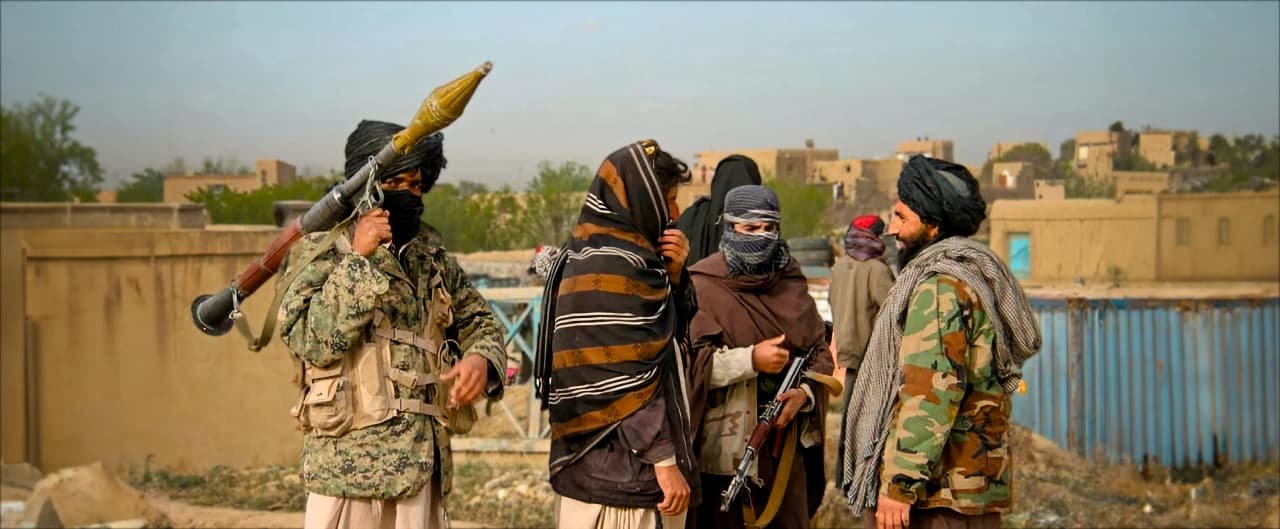
The use of the term “Fitna al-Khawarij” for Tehrik-e-Taliban Pakistan is a clear indication that Pakistani state and military do not simply consider TTP as a terrorist organization, but as something primarily outside the legitimate Islamic political, social and religious order. Theologically speaking Khawarij were the outcasts of Islamic history. Whereas Deobandi tradition of which TTP is an offshoot has become theological mainstream of Pakistani society in the post-Afghan Jihad period. This piece presents a different argument. If it is difficult to dub TTP as Khawarij why the term has become so useful for Pakistani military and state.
The unexpected clue lies in a lengthy research paper about nineth century Muslim Anarchists penned by famous but deeply unconventional Danish historian of Islam, Patricia Crone. Apparently at a first glance, this paper titled, “Nineth Century Muslim Anarchists” published by Oxford University Press in May 2000, provides an unexpected foundation to Pakistani state’s decision to label TTP as Khawarij. Crone’s does not say that all Kharijites were anarchists. Kharijites rebelled against Islamic Caliphate, but they believed in the necessity of government or a ruler over the society. She identifies sub-group, Najdiyya, which developed the idea that society does not require an imam or a ruler at all. This was a radical idea in the context of nineth century Muslim political thought, which generally agreed that the society needed and required an Iman, caliph or ruler. The debate among Muslim groups and thinkers usually revolved around who should rule and under what circumstances.
In western political thought, anarchists have a special place and status, “Western anarchism, medieval or modern, has its ultimate origins in the Western conviction that human society pre-dates the emergence of the state. The Western tradition abounds in claims that once upon a time humans lived together without coercive government – in Paradise, the golden age, the state of nature, in primitive societies or before the development of agriculture”.
In Pakistan’s political and media discourse there has been no debate on the historical-theological aspect of Pakistani military’s decision to associate TTP with this radical sect of Islamic history. Field Marshal Asim Munir used the term “Fitna al-Khawarij” for Pakistani Taliban sometimes in the days of 2023. Later ISPR started using the term in its press release on military operations in tribal areas. Despite my best efforts I have not come across a single piece of writing in Pakistani media on the historical context of this term and whether TTP qualifies to be labelled as “Fitna al-Khawarij. In an interview with Al-Jazeera DG ISPR, Lieutenant General Ahmed Sharif Chaudhry explained that the term “Khawarij” is now commonly used within Pakistan’s military and media circles to refer to armed groups that attack the state and its institutions. He further clarified that, according to Islamic principles, only the state holds the authority to declare jihad or armed conflict and no individual, group, or organization has that right. He asserted that Fitna al-Khawarij has nothing to do with Islam, humanity, Pakistan, or its cultural traditions. In this way he completely sidestepped the historical context of associating TTP with the Kharijites.
If we go by the logic presented by military officials, then we can say that TTP’s act of rebellion against a legitimate Muslim state makes them fit to be associated with Kharjites of early Islamic history. Pakistani Taliban are not against any government or doesn’t believe in removing any Prime Minister from office. Its armed rebellion challenges the legitimacy of Pakistan’s constitutional and political order. TTP challenges the authority of Pakistan state to make rules for people of the country, and it seeks to replace this order with an “Islamic order” with its own conception of Islamic rule. The problem of Pakistan state is that it wants to identify Taliban not simply as a violent group but as someone which has rebelled against a legitimate Muslim political order. To this extent Pakistan government’s decision to label TTP as “Fitna al-Khawarij makes sense.
But Pakistani Taliban are not anarchists. Crone’s Muslim anarchists of Nineth Century challenged the basic tenet of ordered political society. They questioned whether Muslim societies need an Imam or a central political authority enforce Sharia law. TTP doesn’t hold any such position. It wants to destroy Pakistan’s political and constitutional order, but it does not believe in a stateless society. It envisages an emirate for Pakistani society where Sharia will provide rules to govern. Nineth Century Muslim Anarchists wanted to destroy and abolish the necessity for ruler in a Muslim society. Pakistani Taliban wants to become the rulers. TTP might by anti-Pakistani state, but it is not anti-state in the anarchist sense of the term.
It goes without saying that TTP is one of the most violent militant groups in Pakistan’s history. It is true that it cannot be described as anarchists in ideological sense, but it is practically an anarchist group. Its ruthless and rampant violence could lead towards anarchy in society, especially if Pakistani state and its machinery fail to use all its power to break its back. But let’s give the devil its due: Taliban have a competing theory of political authority which disqualifies it to be described as an anarchist in the sense used by Patricia Crone in his piece on Muslim anarchists.
There are three possible meanings of the term in Pakistani context and in the context of Islamic history. Frist it could be used in a theological sense. The classical Kharjites have specific doctrinal and historical characteristics, which cannot be applied to TTP in their theological meanings. In theological terms Kharjites were never part of Muslim mainstream. TTP because of its association with Deobandi sect have become mainstream of Pakistani society primarily because Pakistani state machinery facilitated Deobandi groups in assuming center stage in the country 1980s and 1990s.
Second meaning of the term is the historical-political sense in which it has been used over the centuries. These meanings indicate Kharjites radical and anarchist nature. In this sense the term “Fitna al-Khawarij could only be partially applied on TTP. In the most direct sense TTP wants to construct the political authority in Pakistan which Crone’s anarchist questioned in the ideological sense.
Perhaps Pakistani state is using the term in its political meaning as a language of legitimacy. TTP is a terrorist organization which is challenging the political and constitutional order of a Muslim state. This delegitimizes TTP religious claims and legitimizes the use of force by Pakistani state against Taliban.
There is nothing unusual about state’s attempt use examples from Islamic history to delegitimize a violent group which claims justification for their violence from their so-called Islamic ideology. In the present form this term appears akin to political insult rather than a historical classification. The term “Fitna al-Khawarij” doesn’t simply describe an enemy as violent, it defines enemy’s relations to society, Islam and Islamic history. This move might bring with it the problems. At some point in time the media and religious circles might come up with their own criticism and objections to the term. At present media is pliant and religious clergy’s thought process is completely ahistorical. So luckily the military’s move carries no problems and controversies with it.
Crone’s Muslim Anarchists do not present clear historical basis for Pakistani Taliban to be labelled as “Fitna al-Khawarij. Pakistani state is in the habit (or maybe it is political necessity) of becoming more catholic than the Pope in its competition with violent and extremists’ religious groups. It is trapped by the logic which extremist groups peddle in their bid to control society and the state and in the process lose all semblance of normalcy and balance. In this competition state itself presents an image of an extremist entity. Thus, trivializing all attempts to promote normal social and political conditions in society.