Author

Iran-Backed Militias Open New Front Against Saudi Arabia From Iraq
ISLAMABAD: Kingdom of Saudi Arabia said on Friday drones launched from Iraq led to the temporary closure of a crucial oil export route used to bypass the lockdown of the Strait of Hormuz.
Riyadh has increased its use of the East-West pipeline, which links Abqaiq, near the Gulf, to the port of Yanbu on the Red Sea, since the start of the Middle East war to bypass the closure of the Strait of Hormuz by Iran.
The Saudi foreign ministry condemned “the targeting of the East–West pipeline in the Riyadh and Medina regions by several drones coming from Iraq, which caused human injuries and damage”
“The pipeline was stopped as a precaution, and the attacks resulted in some injuries,” an energy ministry official told the SPA news agency earlier.
Satellite images from Copernicus Sentinel Data taken on Thursday showed black smoke billowing near Madina, along the general route of the East-West pipeline that carries Saudi oil to its Red Sea coast.
The office of Iraqi Prime Minister Ali al-Zaidi confirmed the attack originated from Iraqi territory and said on X that the commander in charge of the southern province of Maysan had been dismissed.
The Iraqi government said it condemned “the attacks targeting our brethren in the Kingdom of Saudi Arabia originated from a location within the governorate”.
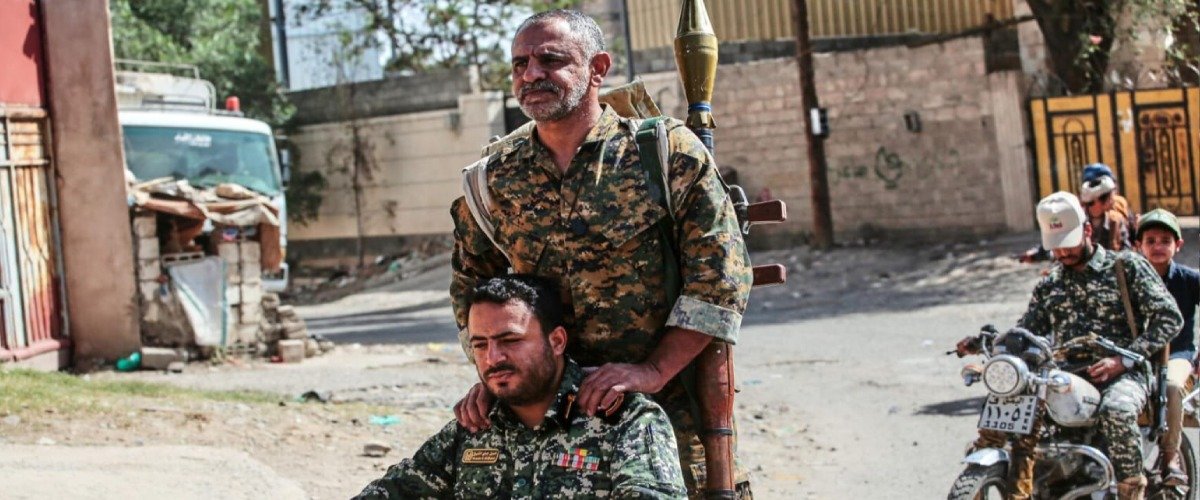
The attacks on Saudi Arabia from Iraqi territory are primarily linked to Iran-aligned Iraqi armed groups, operating under the broader umbrella of the Islamic Resistance in Iraq. This is not a single militia but a coalition of several Shiite armed factions with close links to Iran. Among the most prominent are Kataib Hezbollah, Harakat Hezbollah al-Nujaba, and Kataib Sayyid al-Shuhada. These groups have developed substantial drone and missile capabilities and have previously targeted US and Saudi interests in the region.
There is, however, an important complication in identifying the perpetrators. Saudi Arabia has blamed Iran-backed Iraqi militias, while regional assessments have also indicated that Yemen’s Houthi movement has been involved in attacks launched from Iraqi territory. Reuters reported in July that Saudi and regional officials believed the Houthis had conducted attacks against Saudi Arabia from Iraq in coordination with Iraqi armed groups.
The development points to increasing operational cooperation among Iran-aligned groups across Iraq and Yemen.
The Iranian role appears to go beyond support for established militias. Reuters reported in June that the Islamic Revolutionary Guard Corps (IRGC) had established small, covert cells in southern Iraq, composed of Iraqi Shiite fighters, to conduct drone attacks against Gulf states including Saudi Arabia, Kuwait and the UAE. The purpose was reportedly to use new networks rather than established militias, making it harder to attribute attacks directly to Iran or particular Iraqi factions.
The significance of the latest attack is therefore that Iraq is increasingly becoming another launch platform in the Iran-aligned network confronting Saudi Arabia, alongside Yemen. The Houthis threaten Saudi Arabia from the south and the Red Sea/Bab al-Mandeb, while Iraqi militias and possibly Houthi-Iraqi joint cells can threaten the kingdom from the north. This creates pressure on Saudi energy infrastructure from multiple directions at a time when Riyadh is relying more heavily on its East-West pipeline to circumvent the Strait of Hormuz.