Author

Makkah Defence Pact Has No Regional Ambitions, Says DG ISPR
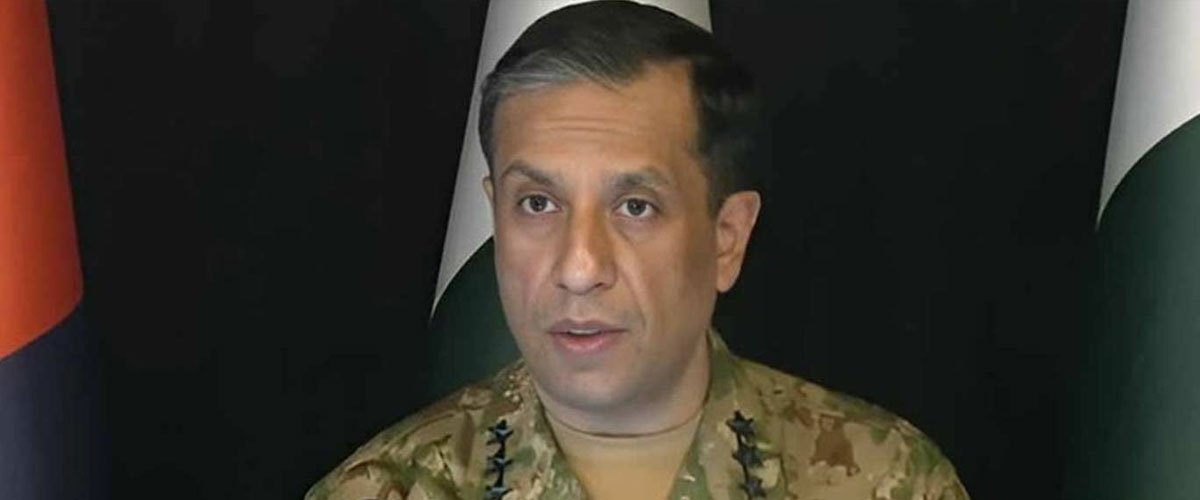
ISLAMABAD: Director General ISPR Director General Lieutenant General Ahmed Sharif Chaudhry has said that the Makkah Defence Alliance — a tripartite agreement between Pakistan, Saudi Arabia and Turkiye — has no “regional aspirations”, adding that it is intended for collective deterrence.
The military spokesperson made the remarks during an interview on Al Arabiya English’s programme ‘Global News Today’, during a conversation with the host, Tom Burges Watson.
During the show, aired during the early hours of Wednesday, Lt Gen Chaudhry was asked about Pakistan’s commitments under the agreement.
“It formalises Pakistan’s decades-old relationship with the kingdom of Saudi Arabia and the brotherly country of Turkiye in the domains of collective deterrence and defence,” he said.
Watson then asked whether the pact was primarily a defensive cooperation or the beginning of a broader strategic alliance. To that, Lt Gen Chaudhry asserted that the pact was defensive, as its name implied.
The Makkah Joint Defence Agreement was signed by Pakistan, Saudi Arabia and Türkiye on August 7, 2026, committing the three countries to
strengthening collective security and defence cooperation. The agreement stipulates that an armed attack against any one of the three members would be regarded as an attack against all, making collective deterrence its central principle. Pakistan has stressed that the arrangement is defensive and is not directed against any particular country.
The pact has moved beyond a political declaration with the establishment of a Strategic Political and Defence Committee comprising the foreign and defence ministers and military chiefs of the three countries. At its first meeting in Istanbul on August 31, the members agreed to establish a permanent secretariat in Saudi Arabia, initially headed by a Pakistani secretary-general for three years. They also agreed to deepen defence-industry cooperation, joint technology development and production, and coordination between their armed forces.
The agreement has assumed greater significance amid the worsening security situation in the Middle East, particularly attacks on Saudi Arabia by Yemen’s Iran-aligned Houthis. Pakistan has nevertheless said that no military response under the pact has been discussed in relation to the recent attacks. The Foreign Office has also indicated that expansion of the arrangement is not currently under consideration, with the three founding members first seeking to consolidate the new framework.
The question of the pact’s wider strategic role has also emerged because Pakistan, Saudi Arabia and Türkiye maintain separate defence and strategic relationships with other major powers and alliances. DG ISPR’s latest clarification seeks to define the arrangement as complementary rather than as a competing regional bloc. He has also said that the agreement is not formally a “Muslim alliance”, although it could eventually accommodate willing partners that share its stated principles of non-aggression, non-interference and collective deterrence.