Author

Pakistan’s Cross-Border Strikes in Afghanistan: A History of Retaliatory Operations
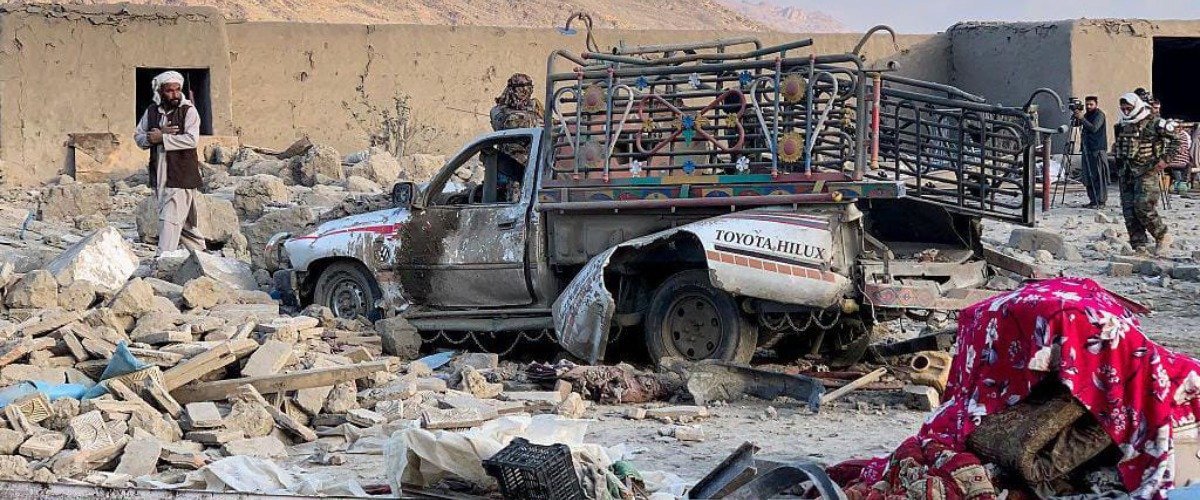
ISLAMABAD: Pakistan has conducted precision aerial, and drone strikes in 10 locations across Afghanistan in retaliation for drones launched from the neighboring country a day earlier, Information Minister Attaullah Tarar said in the early hours of Thursday.
“In exercise of its sovereign right to self-defence, Pakistan conducted precision aerial and drone strikes against 10 locations in Afghanistan used for launching and storing these drones,” Tarar wrote in a post on social media platform X.
He added that the strikes were “deliberate, precise, calibrated and proportionate, and strictly limited to identified military objectives directly linked to the attempted attacks against Pakistan”.
Pakistan’s decision to conduct precision aerial and drone strikes at 10 locations in Afghanistan comes against a backdrop of increasingly frequent cross-border military action since the Taliban returned to power in Kabul in August 2021. Islamabad has repeatedly accused the Tehreek-i-Taliban Pakistan (TTP) and allied militant groups of using sanctuaries in Afghanistan to plan attacks inside Pakistan, while Kabul has denied providing such support. The deterioration in relations has turned the once largely indirect security contest into an increasingly direct military confrontation.
Pakistan’s first acknowledged major air operation inside Afghanistan after the Taliban takeover took place in April 2022. Pakistani forces struck targets in Khost and Kunar following a series of attacks on Pakistani security posts along the border. Islamabad subsequently maintained that the operations were directed against militant elements, while Afghan authorities condemned the strikes as violations of Afghan sovereignty and reported civilian casualties. The episode marked an important departure from Pakistan’s earlier policy of dealing with the Afghan Taliban through diplomatic and security channels.
For much of the period before 2021, Pakistan had relied more heavily on intelligence-sharing, ground operations on its own side of the border and cooperation with international forces operating in Afghanistan. Pakistan also maintained a long-standing policy of supporting the Afghan Taliban while fighting the separate but ideologically allied TTP. After the Taliban’s return to Kabul, however, Islamabad increasingly argued that the absence of US and NATO forces had removed an important mechanism for containing anti-Pakistan militants operating from Afghan territory. The TTP’s renewed campaign inside Pakistan subsequently became a central source of friction between Islamabad and Kabul.
Pakistan carried out another acknowledged air operation in Afghanistan in March 2024, targeting alleged militant hideouts in Khost and Paktika. Islamabad said the operation targeted members of the Hafiz Gul Bahadur faction, which Pakistan associates with attacks on its territory. The strikes followed a militant attack in North Waziristan that killed Pakistani soldiers.
Afghanistan condemned the operation and reported civilian deaths, illustrating the recurring pattern: Pakistan has presented such operations as counterterrorism or self-defence measures, while the Taliban authorities have treated them as attacks on Afghan sovereignty.
The pattern continued in late 2024 and 2025, with Pakistan conducting further strikes against alleged TTP and allied militant positions, including in Paktika, while the Taliban government repeatedly protested and denied allowing Afghan territory to be used against Pakistan. UN reporting documented an increase in air and drone activity and exchanges of fire along the frontier during this period. The latest strikes therefore represent not an entirely new policy but a further escalation of a strategy that has gradually moved Pakistan from diplomatic pressure and border operations toward direct action against alleged militant infrastructure inside Afghanistan.