
Author

Makkah Defence Pact Faces First Test Amid Rising Gulf Tensions
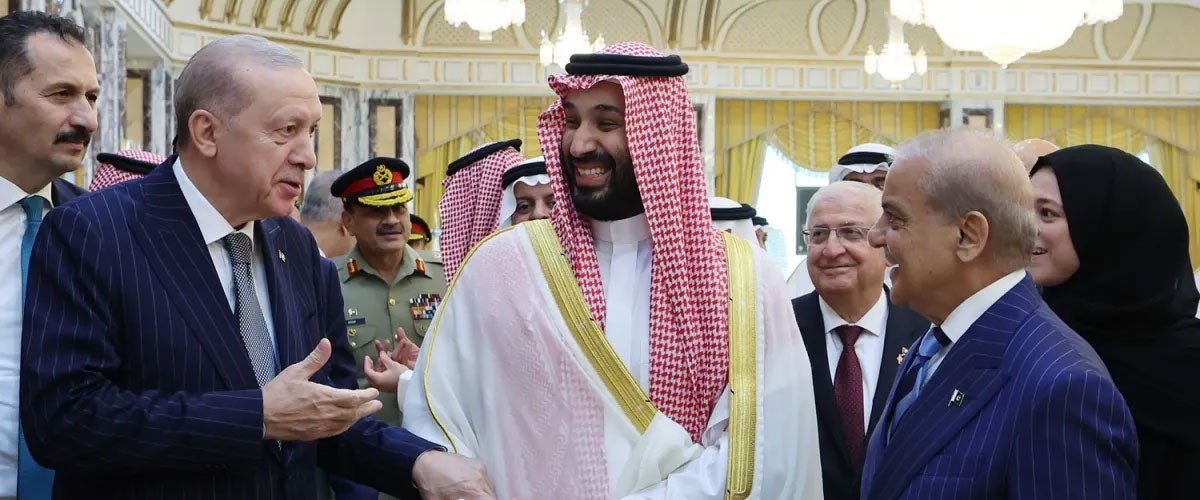
ISLAMABAD: The military chiefs of three Muslim countries which are signatory to Makkah Defense Agreement reviewed security situation on Friday, Pakistan military’s media wing reported on Saturday through a statement.
The meeting of the Chief of Defense Forces and Chiefs of General Staff of the States’ Parties to the Makkah Joint Defense Agreement was held in Riyadh on Friday September 25th, 2026, with the participation of the Kingdom of Saudi Arabia, the Islamic Republic of Pakistan, and the Republic of Türkiye.
The Chiefs of Defense Forces and Chiefs of General Staff reviewed the security situation and the threats facing the Kingdom of Saudi Arabia. They strongly resented the attacks targeting the Holy City of Makkah and civilian and economic infrastructure. They appreciated the vigilance and professionalism of the Saudi Armed Forces for ensuring safety of the people and security of the Kingdom.
The participants also discussed ways to further advance cooperation among the armed forces of the three countries and to enhance intelligence sharing, military coordination, and capability integration, thereby strengthening deterrence and collective defense.
The participants commended the longstanding relations and mutual trust that bind the people and the armed forces of the three countries. They noted that their meeting in Riyadh reflects the strength of their defense partnership and their shared determination to immediately translate the commitments of the Makkah Joint Defense Agreement into effective military cooperation.
The participants strongly affirmed their commitment to collective defense thereby demonstrating the resolve of the three countries in defending the security, sovereignty and territorial integrity of the Kingdom of Saudi Arabia.
The broader security environment has deteriorated sharply across the Persian Gulf and adjoining Red Sea since the escalation of the US-Iran conflict. The Strait of Hormuz remains a major flashpoint, with fighting and threats to shipping disrupting regional energy flows, while Tehran has warned that the conflict could spread beyond the Gulf and into the Indian Ocean. Iran has also proposed reopening Hormuz as part of a ceasefire arrangement, but the diplomatic track remains uncertain.
For Saudi Arabia, the threat has increasingly acquired a direct military dimension. Iran-aligned Houthi forces in Yemen have intensified missile and drone attacks against Saudi territory, including an attempted strike on Riyadh on September 19 and a drone intercepted near Makkah earlier in the month. The attacks have extended to Saudi energy and civilian infrastructure and come alongside renewed fighting around Yemen and growing risks to shipping through the Red Sea and Bab al-Mandab.
The Riyadh meeting therefore comes as the Makkah agreement faces its first major test in an increasingly interconnected Gulf security crisis. Pakistan, Saudi Arabia and Türkiye have moved from establishing the pact’s institutions towards intelligence sharing, military coordination and capability integration, while Pakistan’s Foreign Office has stressed freedom of navigation, sovereignty, non-interference and de-escalation. The immediate issue is not only protection of Saudi territory but the possibility that attacks involving Iran, the Houthis, Hormuz and the Red Sea could widen the geographic theatre of conflict and place the three countries under pressure to translate their collective-defence commitment into practical security arrangements.
