Author

Iran Signals Openness to Peace Talks Amid Deepening Domestic Strain
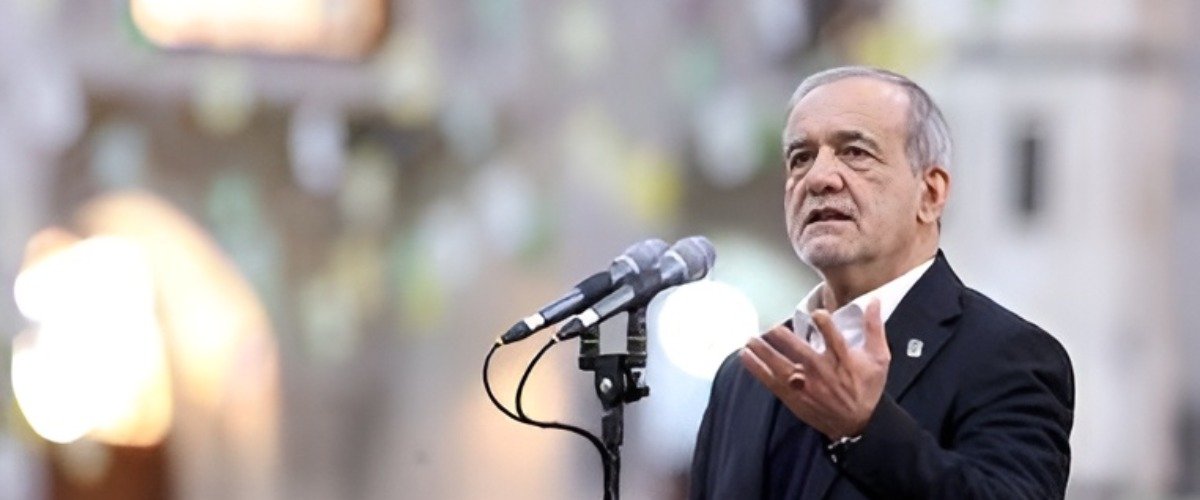
ISLAMABAD: Iranian President Masoud Pezeshkian has told his Russian counterpart Vladimir Putin that “Iran is fully prepared to reach a balanced and fair agreement that ensures lasting peace and security in the region,” Iran’s Fars News Agency reported on Wednesdy.
“Our red line is the national interests and rights of the Iranian people. If the United States adheres to international legal frameworks, reaching an agreement is not out of reach,” Pezeshkian is quoted as saying.
The Iranian president adds that Tehran is “ready to cooperate and collaborate with its neighbors to achieve the region’s own peace and security – without the presence or interference of extra-regional countries”.
Putin underscores the need for the US and Israel to pay war reparations and ensure that Iran receives “long-term security guarantees to prevent a repeat of the aggression”, Fars reported.
The prospect of peace is emerging against a backdrop of deep mistrust between Washington and Tehran. Pezeshkian’s latest message to Putin suggests that Tehran is keeping the diplomatic door open, but on terms that it regards as compatible with Iran’s sovereignty and legal rights. This is consistent with his earlier position that Iran would implement the Islamabad memorandum if the United States returned to the understanding.
The principal obstacle remains the gap between the two sides over what a settlement should contain. Washington has demanded substantial restrictions on Iran’s enrichment capability, while Tehran insists on recognition of its right to peaceful nuclear activity and an end to what it considers unlawful pressure.
The failure of the earlier understanding has also deepened Iranian concerns that an agreement could be followed by renewed military action or sanctions. Pezeshkian has described this as an atmosphere of distrust, arguing that diplomacy cannot succeed without reciprocal commitments.
For Iranian society, however, the cost of continuing the confrontation is becoming increasingly difficult to separate from the diplomatic question. The prolonged war and sanctions have placed additional pressure on an economy already struggling with inflation, currency depreciation, shortages and declining revenues. Recent reporting has put inflation at extremely high levels and documented growing pressure on public-sector workers, including teachers and nurses. The government has consequently been looking for measures to cushion the impact of the economic crisis on ordinary Iranians.
This domestic pressure creates a complicated environment for diplomacy. Tehran needs relief from the economic consequences of the conflict, but Iranian leaders also have to demonstrate that negotiations will not come at the expense of national rights or security. Putin’s call for reparations and long-term security guarantees therefore addresses one of Tehran’s central concerns: that ending the current fighting without credible guarantees could merely create the conditions for another round of military confrontation. At the same time, Washington’s insistence on concrete Iranian concessions shows how far apart the two negotiating positions remain.
The latest Pezeshkian-Putin exchange consequently points to a possible diplomatic opening rather than an imminent peace agreement. Tehran is signalling that it is prepared to negotiate, while insisting that the settlement must provide security, preserve what Iran regards as its legitimate rights and end the cycle of attack and retaliation. The humanitarian and economic strain inside Iran gives diplomacy an important domestic dimension: for ordinary Iranians, a durable settlement would mean not simply the end of military strikes, but an opportunity to begin recovering from a prolonged economic and social crisis.