
Author

Our Pakistani Pelé – Abdul Ghafoor Majna
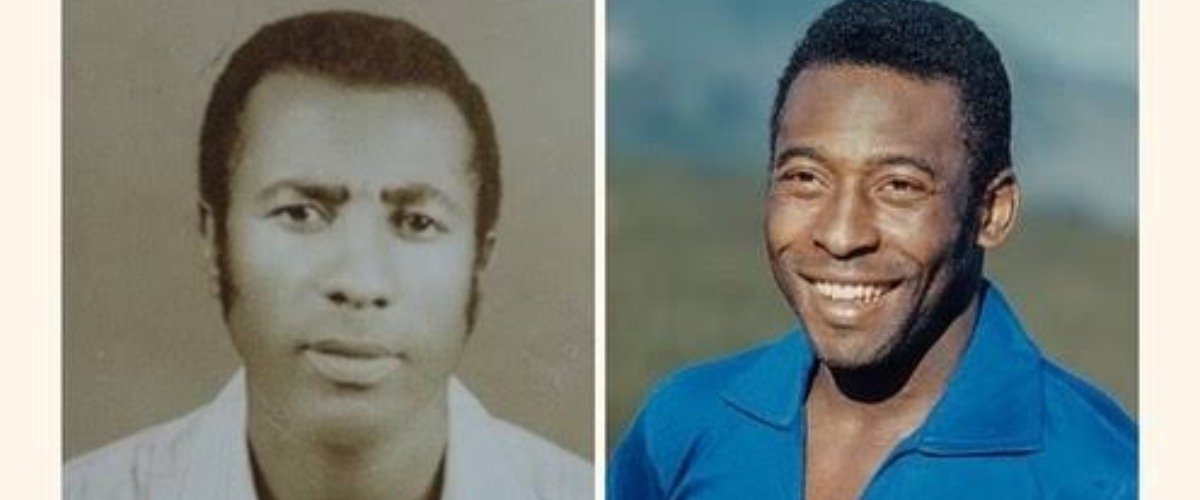
Our Pakistani Pelé – Abdul Ghafoor Majna
He was a footballer who turned down the outside world out of love for Pakistan, yet we Pakistanis failed to give him the recognition he deserved. His name was Abdul Ghafoor Majna, a boy who rose from Safi Lane, Baghdadi, in the streets of Lyari. Locals nicknamed him “Majna” because of his powerful shots, with the name carrying the meaning of “I’ll strike you down.” The world, however, called him the Pakistani Pelé because his appearance and style of play reminded people of the legendary Brazilian footballer.
Abdul Ghafoor’s journey began in 1957 with Safi Sports, but he gained real recognition in Kolkata. At the time, Kolkata Mohammedan was one of the biggest football clubs in the subcontinent. When Majna played there, spectators in the stadium would chant his name. From Kolkata, he moved to Dhaka Mohammedan, where he became a true hero. People from all over Dhaka came to watch him play.
After that, the world was at his feet. Major clubs from India, Russia, China, and Saudi Arabia were prepared to offer him whatever price he demanded. But Majna had only one answer: “I will play in my own country, for my own people.”
He left behind the glamour and riches of Dhaka and returned home to play for Karachi Port Trust (KPT), where his father had worked as a laborer. Majna chose the jersey bearing Pakistan’s green crescent and star over wealth and fortune.
What he did for that jersey is something we can hardly imagine today.
He was selected for Pakistan’s national team in 1959, when Pakistan ranked among Asia’s top 10 teams. In the 1959 Asian Cup qualifiers, Pakistan defeated Iran 4–1, beat traditional rivals India 1–0, and held the formidable Israeli team to a 2–2 draw. Majna scored a goal in that match.
Then came the Merdeka Cup in Malaysia, one of the biggest football tournaments in Asia at the time. In the 1960 Merdeka Cup, Pakistan thrashed Thailand 7–0 and defeated the strong Japanese team 3–1. In 1962, Pakistan reached the final of the same tournament.
Other notable achievements included Pakistan’s tour of China in 1964, matches against Iran and Turkey in the RCD Cup, and historic victories over Russia and the United Arab Emirates.
These were among the achievements that led to Majna being selected for Asia’s All-Star XI in 1960. To this day, he remains the only Pakistani to have received this honour.
In 2007, a brain hemorrhage left half of his body paralyzed. For five long years, the Pakistani football legend remained confined to a charpoy in the same modest home in Lyari where he had grown up. His financial circumstances were so dire that even his medical treatment became difficult to afford.
In his final years, the Sindh government provided financial assistance of 100,000 rupees, which helped make his treatment possible. But the blame does not lie with the government alone. We, too, are equally responsible. No major businessman visited his home. We journalists failed to raise our voices for him, and those involved in football did not even organize a fundraising campaign to help pay for Majna’s treatment.
On September 7, 2012, Abdul Ghafoor Majna passed away at the age of 74, in a state of poverty and neglect.
Today, Pakistan stands at 197th in the FIFA rankings, whereas during Majna’s era, we were among Asia’s top 10 teams.
This is not just Majna’s story. It is our story — a story of how we fail to honour our heroes while they are still alive.
By Ali Hassan
